Cookies Popup

When 'cookies popup' activated on a site. After users click 'I Agree', it closes the popup.
At the backend, is there a record or something to indicate that users have 'agreed' to accept cookies?

-

Hi Patrick,
We will improve the Cookies popup from the Brizy builder but at the moment in the backend isn't stored these data.
Best regards,
Sandra
0 -

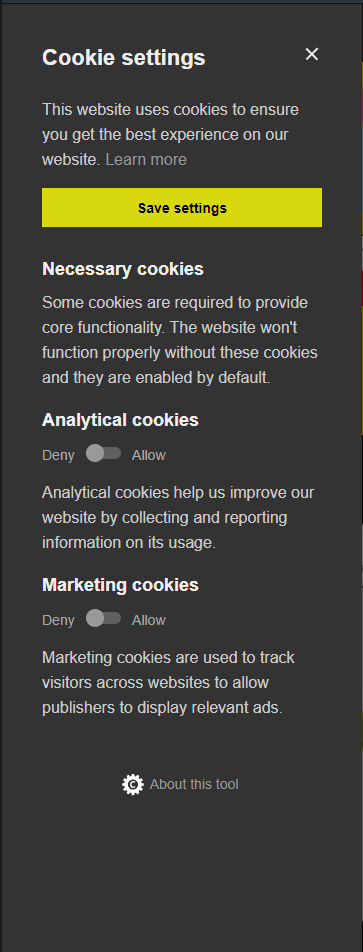
This is not only about storing. This is about allowing the visitor to select all their preference and keeping all the cookies disabled until they choose to allow all on any particular individual cookies. I just like the way https://wordpress.org/plugins/gdpr/ allows to filter via cookie name. Infect if this would be done we will able to use it for all of our and out clients site infect something like this will be really helpful to all the pro and bcloud studio users with
Location intelligence
You can set up your GDPR campaign to show only to visitors to your site from the EU and UK or if you want you can set it to show to everyone...it's up to us, we have built this function into the app to give you maximum flexibility.
Example 1:
Example 2:
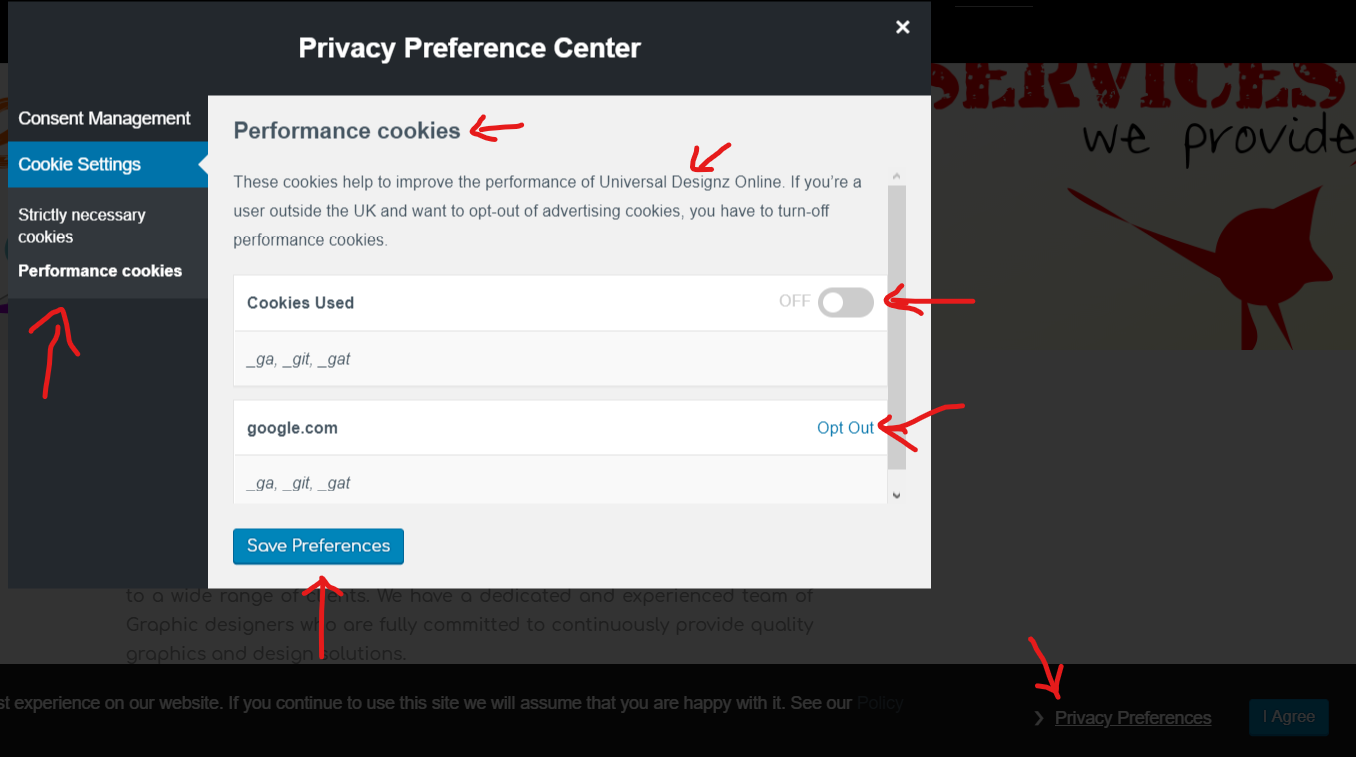
When will this be released? This is very critical for all of us based in EU and UK
Kindest Regards
Jay Vijay
1 -

Patrick + Brizy Team,
Storing in back-end would be a bad idea. What information would that be? If we want GDPR, that in-itself would need a pop-up to 'Agree' to store information about the fact you agreed to the cookie consent........ You see the issue here?
No-one should be storing data related to who clicked Agree.
Jay is right about this. The main idea is that cookies are not stored until the Agree is clicked. However, many websites do not do this nor the tech in place to do this.
Still, I don't think we want such fine degrees as which cookies to include / exclude. It's different for Wordpress. Giving such easy opt-outs would ruin most web-based marketing campaigns.
It's really important to remember that this is different for any website aimed at B2B customers. GDPR is aimed at protecting personal identifying information only. So there is nothing wrong, in GPDR terms, in storing analytical or marketing data (non-identifiable) or data on visits from business IP addresses.
GDPR is still a grey area. The key thing is the warning - proceed and we store cookies. That should protect most people.0 -
Hi Patrick,
Storing in back-end would be a bad idea. What information would that be? If we want GDPR, that in-itself would need a pop-up to 'Agree' to store information about the fact you agreed to the cookie consent........ You see the issue here?
- This would be classified as an essential cookie as the soul propose of it to serve would be to provide an ability for the visitor to select their preference.
Jay is right about this. The main idea is that cookies are not stored until the Agree is clicked. However, many websites do not do this nor the tech in place to do this.
- Thanks you. Well all I can say it's their own choice Patrick.
Still, I don't think we want such fine degrees as which cookies to include / exclude. It's different for Wordpress. Giving such easy opt-outs would ruin most web-based marketing campaigns.
It's really important to remember that this is different for any website aimed at B2B customers. GDPR is aimed at protecting personal identifying information only. So there is nothing wrong, in GPDR terms, in storing analytical or marketing data (non-identifiable) or data on visits from business IP addresses.
- I know none of us really are happy with this how difficult it's make things and on a serious note how many people really even has time to be bothered to sit and read?
Please read the PDF below. End of the day this would be an optional feature (for BrizyPro and BCloud Studio) for businesses (websites) needs to use this feature (not all the counties might even be using this due to their own means) also don't forget not everyone is B2B.
I would like to see where it officially on the gov site it states or has been mentioned about it's fine for B2B business websites for EU and UK can you kindly provide me with a url.
GDPR is still a grey area. The key thing is the warning - proceed and we store cookies. That should protect most people.
- Please read follow the link. ( also I hope you are on Brizy trello https://trello.com/c/x5xvsZKM )
https://ico.org.uk/media/for-organisations/documents/1545/cookies_guidance.pdf
Consent
The Regulations require that users or subscribers consent. Directive 95/46/EC
(the Data Protection Directive on which the UK Data Protection Act 1998 (the
DPA) is based) defines ‘the data subject’s consent’ as:
‘any freely given specific and informed indication of his wishes by which the data
subject signifies his agreement to personal data relating to him being
processed’.
Consent must involve some form of communication where the individual
knowingly indicates their acceptance. This may involve clicking an icon, sending
5 V.3 May 2012 an email or subscribing to a service. The crucial consideration is that the
individual must fully understand that by the action in question they will be giving
consent.Introduction
The Privacy and Electronic Communications (EC Directive) Regulations 2003 (the
Regulations) cover the use of cookies and similar technologies for storing
information, and accessing information stored, on a user’s equipment such as
their computer or mobile.
A cookie is a small file, typically of letters and numbers, downloaded on to a
device when the user accesses certain websites. Cookies are then sent back to
originating website on each subsequent visit. Cookies are useful because they
allow a website to recognise a user’s device. The Regulations apply to cookies
and also to similar technologies for storing information. This could include, for
example, Local Shared Objects.
The use of cookies and similar technologies has for some time been
commonplace and cookies in particular are important in the provision of many
online services. Using such technologies is not, therefore, prohibited by the
Regulations but they do require that people are told about cookies and given the
choice as to which of their online activities are monitored in this way.Background
The 2003 Regulations implemented a European Directive - 2002/58/EC - which
is concerned with the protection of privacy in the electronic communications
sector. In 2009 this Directive was amended by Directive 2009/136/EC. This
included a change to Article 5(3) of the E-Privacy Directive requiring consent for
storage or access to information stored on a subscriber or users terminal
equipment – in other words a requirement to obtain consent for cookies and
similar technologies.
Governments in Europe had until 25 May 2011 to implement these changes into
their own law. The UK introduced the amendments on 25 May 2011 through The
Privacy and Electronic Communications (EC Directive) (Amendment) Regulations
2011.
The rules in this area are essentially designed to protect the privacy of internet
users – even where the information being collected about them is not directly
personally identifiable. The changes to the Directive in 2009 were prompted in
part by concerns about online tracking of individuals and the use of spyware.
These are not rules designed to restrict the use of particular technologies as
such, they are intended to prevent information being stored on people’s
computers, and used to recognise them via the device they are using, without
their knowledge and agreement.Disclaimer (whoever is reading this discussions please note):
I am not any form of GDRP professional Officer, Consultant, Advisor or a lawyer nor do I encourage anyone in anyway or form to rely on my discussions. It would be solely your decision read on Gov. website or hire a GDRP professional Officer, Consultant, Advisor or a lawyer for any clarification for your business(es) and website(s) legal compliance.
Kindest Regards
Jay Vijay @ Universal Designz
1
Please sign in to leave a comment.
Comments
4 comments